

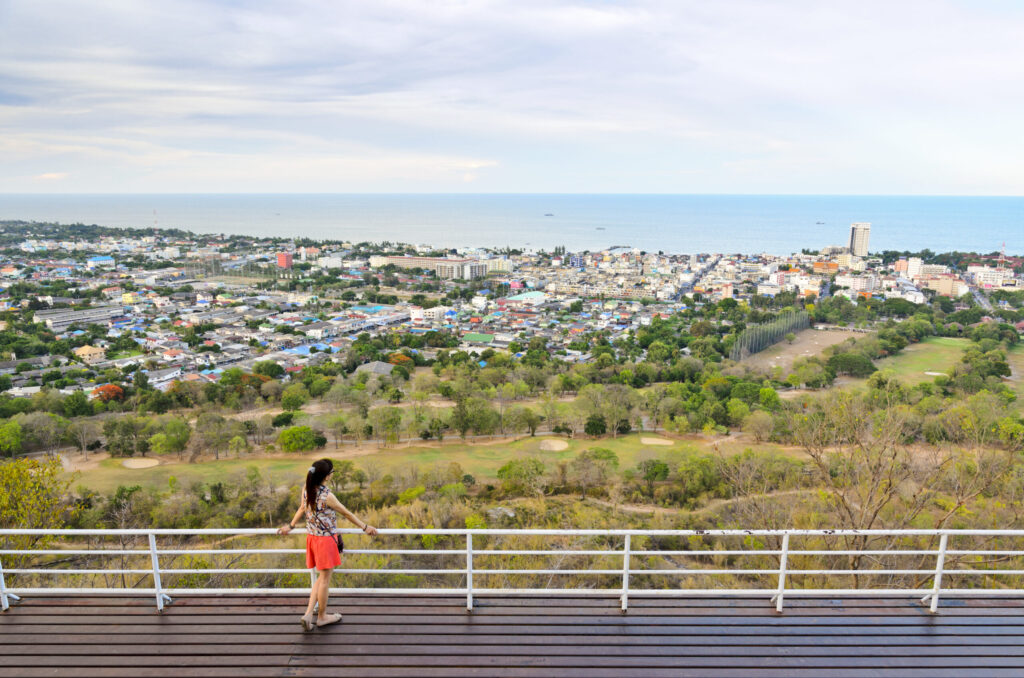
Living by sea in Hua Hin is a daily education that no classroom can replicate. The Gulf of Thailand shapes everything here — the food, the community, the pace, the history, and the way this town has understood itself for over a hundred years. For students aged 7 to 17 on a Dragon Study Tours programme, living by sea in Hua Hin means learning English inside one of the most naturally compelling environments in Southeast Asia.
What Living by Sea Means in Hua Hin
Living by sea in Hua Hin begins with the fishing community that built this town long before the railway arrived in 1922. The pier that those original fishing families worked from is still operating today. The boats still go out before dawn. The catch still comes back to the same markets and the same restaurants that have been feeding this community for generations.
That continuity — the sense of a place that knows what it is and has never needed to be anything else — is what makes living by sea in Hua Hin so powerful for students. It is not a seaside attraction. It is a seaside community. And the difference is everything.
Living by Sea Safely: The Dragon Study Tours Framework
Living by sea with students aged 7 to 17 requires a safety framework that parents and schools can trust without reservation. Dragon Study Tours has built and refined that framework across years of operating in Hua Hin.
The Palm Residence provides CCTV throughout, controlled access at all times, and a night security manager on site every evening. Twenty-four-hour welfare support from Dragon Study Tours staff is available around the clock. Every excursion to the seafront, the pier, and the coastal landmarks is risk-assessed before students leave the building.
Students are supervised and identifiable in their red Dragon polo shirts at all times. The Dragon Study Tours app gives parents and group leaders real-time schedule updates and direct emergency contact information throughout the programme. Safeguarding procedures are aligned to British Council accreditation standards.
The town of Hua Hin provides the wider safety net. Crime rates are among the lowest of any tourist destination in Thailand. The seafront is well maintained, well lit, and watched over by a community shaped by a century of responsible visitor care.
The Coastal Landmarks That Define Living by Sea in Hua Hin
The Centara Grand Beach Resort — built on the site of the original 1923 Railway Hotel — stands at the seafront as the most visible expression of what living by sea in Hua Hin has always meant. Elegant. Enduring. Connected to the history of a town that was shaped by the highest standards from its very first decade.
Klai Kangwon Palace — the royal residence whose name means “Far from Worries” — sits on the coast as a reminder of why this stretch of the Gulf of Thailand was chosen above all others as Thailand’s first beach resort. The beach itself runs through the centre of town, accessible and genuine, framed by the kind of low-rise architecture that living by sea at a human scale actually looks like.
How Living by Sea Builds English Fluency
The vocabulary of the sea — tides, boats, fish, weather, navigation, community — is among the richest in the English language. Living by sea in Hua Hin gives Dragon Study Tours students direct access to all of it, in context, in conversation, and in the kind of real-world situations that make new language stick.
By the end of a Dragon Study Tours programme, students leave having inhabited a coastal community in English. They leave with words they have used, conversations they have had, and a relationship with the sea that will stay with them long after they return home.
Explore the full excursion programme at our 50 things to do in Hua Hin guide. Request a group quote or read our FAQ.