

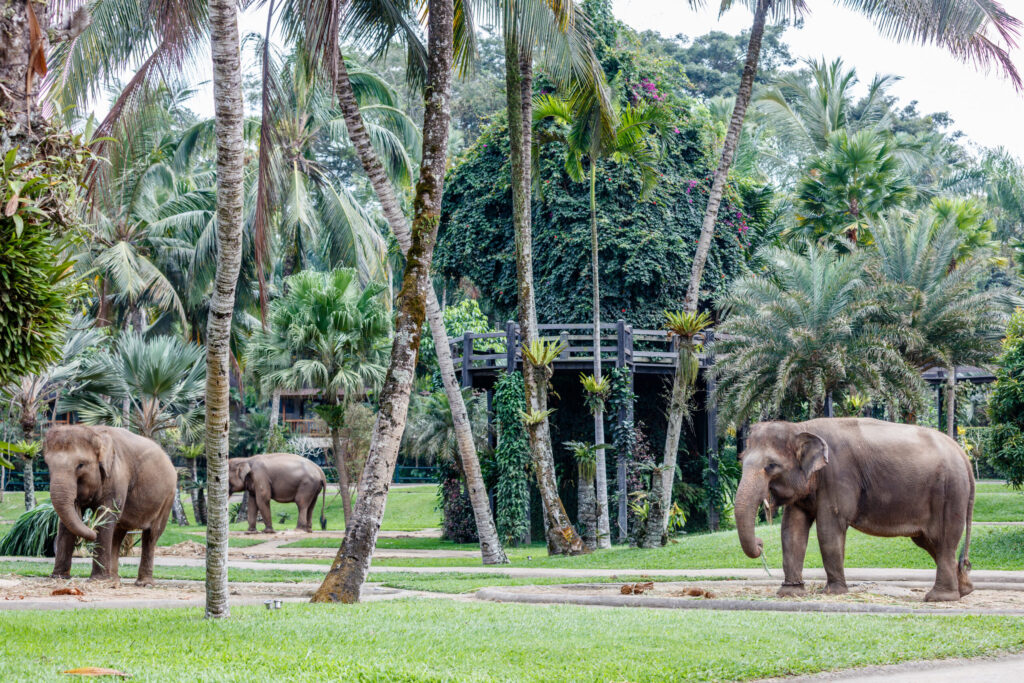
Rescued elephants Hua Hin is not a phrase that appears in many school programmes. The Dragon Study Tours Elephant Conservation Experience puts closed groups aged 13 to 17 inside a real rescue sanctuary — the Hutsadin Elephant Foundation — across seven morning sessions, working directly with the mahouts and care team who look after some of the most remarkable rescued elephants in Thailand. Running all year round, this programme gives groups something that no classroom, documentary, or day trip can replicate: a sustained, working relationship with individual rescued animals over a fortnight.
Who the Rescued Elephants Hua Hin at Hutsadin Are
The rescued elephants Hua Hin at the Hutsadin Elephant Foundation each carry a history that participants learn across the seven sessions of the programme. These are not performing elephants. They are not dressed, painted, or trained to entertain. They are rescued animals — elephants that have come from logging operations that ended when Thailand banned commercial logging in 1989, from street begging in Bangkok and other Thai cities, and from tourism operations that no longer exist.
When Thailand’s logging ban came into force, thousands of working elephants were suddenly without a purpose. Their mahouts — the men who had worked with them for years — faced an impossible situation. Many took their elephants to the streets of Bangkok, begging for food money. Others moved into the tourism industry, where elephants were used for rides, performances, and photo opportunities under conditions that caused significant physical and psychological harm.
The rescued elephants Hua Hin at Hutsadin came from exactly that world. Each one arrived with a history — and often with the physical and emotional scars to show for it. The Hutsadin Elephant Foundation was established by local businessmen with a single aim: to give these animals a life that is full and pain free.
What Participants Do With the Rescued Elephants Hua Hin
Working with the rescued elephants Hua Hin at Hutsadin is not passive. Participants arrive each morning and immediately begin the work that the mahouts and care staff do every day. They prepare and distribute food — elephants eat enormous quantities of fruit, vegetables, and sugar cane, and the preparation alone is significant work. They assist with bathing routines, support habitat maintenance, and learn under supervision about the specific welfare needs of each individual animal.
The Asian elephant is an endangered species. Fewer than 50,000 remain across 13 range countries. Thailand’s captive population — including the rescued elephants Hua Hin at Hutsadin — represents a separate and equally urgent conservation challenge. Each animal at Hutsadin requires lifelong care, and the work that Dragon Study Tours groups contribute across seven sessions is a genuine part of that care.
Why Seven Sessions With the Rescued Elephants Hua Hin Makes the Difference
By the third session with the rescued elephants Hua Hin, participants know which animal prefers which food. By the fifth, they know the individual histories — which one came from a logging camp, which from street begging. By the seventh, the rescued elephants Hua Hin have become individuals with names, personalities, and stories that participants carry with them long after they return home.
That depth of relationship is only possible because the Dragon Study Tours programme gives groups seven sessions rather than one. It is the difference between a visit and an education.
Safety Working With the Rescued Elephants Hua Hin
All sessions with the rescued elephants Hua Hin at the Hutsadin Elephant Foundation are supervised by Dragon Study Tours staff alongside the foundation’s own mahout and care team. Transport is by private air-conditioned coach. The Palm Residence provides 24/7 supervision, secure access, and a dedicated welfare team throughout. Safeguarding procedures are aligned to British Council accreditation standards.
The programme runs all year round for closed groups. Visit our 50 things to do in Hua Hin guide, request a quote, make a booking, or read our FAQ.