

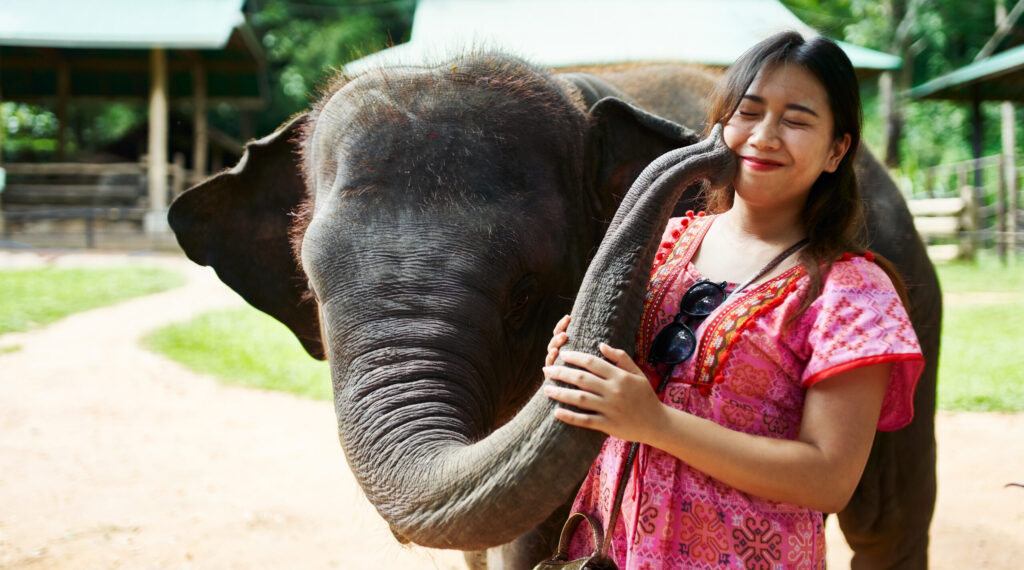
Human elephant conflict Thailand is one of the most complex and urgent conservation challenges in the country — and one of the most important subjects that Dragon Study Tours closed groups aged 13 to 17 engage with across the Elephant Conservation Experience programme. From the rescued elephants at the Hutsadin Elephant Foundation in Hua Hin to the wild elephants of Kui Buri National Park, the programme gives groups a complete picture of human elephant conflict Thailand and the conservation responses that are working to address it. Running all year round.
What Human Elephant Conflict Thailand Is
Human elephant conflict Thailand occurs when wild elephants and human communities compete for the same resources — food, water, and land. As elephant habitat Thailand has been reduced and fragmented over the past century, wild elephants increasingly venture into agricultural areas in search of food, damaging crops and occasionally injuring or killing people. Communities that bear the economic cost of elephant crop raiding often respond with hostility — and in some cases with violence — towards the elephants themselves.
The Wildlife Conservation Society Thailand has been working on human elephant conflict Thailand for years, monitoring elephant populations and developing community-based early warning systems that alert farmers when elephants are approaching agricultural land. The Elephant Conservation Network documents the scale of the challenge — human elephant conflict Thailand affects communities across the western forest complex, the northern highlands, and the Gulf coast corridor that runs through the Hua Hin and Phetchaburi region.
What Teen Groups Learn About Human Elephant Conflict Thailand
Human elephant conflict Thailand is not an abstract problem that exists somewhere far from the Dragon Study Tours programme. The wild elephants at Kui Buri National Park — which groups visit on the weekend excursion — live in exactly the landscape where human elephant conflict Thailand is most acute. The agricultural communities surrounding Kui Buri experience crop raiding regularly, and the park management team has developed specific protocols for managing the conflict.
When groups observe wild elephants at Kui Buri, they are seeing animals that exist within a fragile negotiation between conservation and community — a negotiation that requires constant attention, innovative solutions, and genuine respect for the economic needs of the people who live alongside the elephants.
The Connection Between Human Elephant Conflict Thailand and Sanctuary Work
Understanding human elephant conflict Thailand helps participants understand why the rescued elephants at Hutsadin are not simply returned to the wild. Wild elephant populations in Thailand are under pressure from exactly the kind of human-wildlife conflict that makes release of captive-bred or long-captive animals deeply problematic. The World Wildlife Fund is clear that releasing captive elephants into already-stressed wild populations would exacerbate rather than alleviate the conservation challenge.
The sanctuary work at Hutsadin and the wild elephant conservation at Kui Buri are therefore not competing approaches to the same problem — they are complementary responses to different dimensions of the same crisis.
Safety in the Human Elephant Conflict Thailand Programme
All aspects of the Dragon Study Tours programme are managed within the full safety framework. Transport is by private air-conditioned coach. The Palm Residence provides 24/7 supervision and safeguarding procedures aligned to British Council accreditation standards.
The programme runs all year round for closed groups. Visit our 50 things to do in Hua Hin guide, request a quote, make a booking, or read our FAQ.