

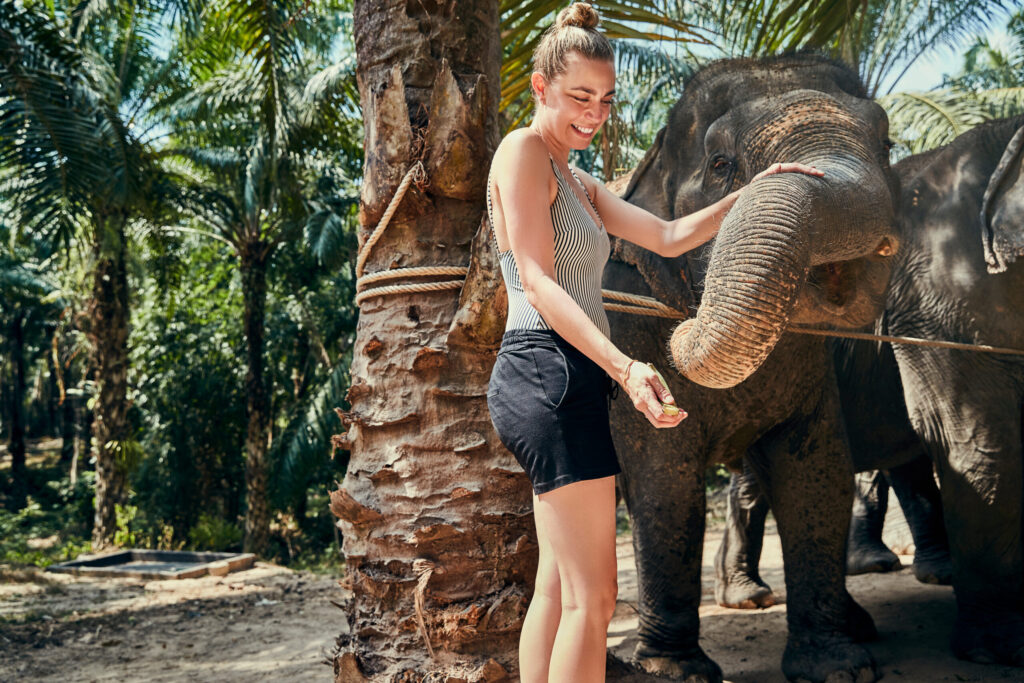
Elephant rescue Thailand is the process that brings every animal at the Hutsadin Elephant Foundation to Hua Hin — and understanding that process is one of the most important things that Dragon Study Tours closed groups aged 13 to 17 learn across the seven morning sessions of the Elephant Conservation Experience programme. Running all year round, the programme gives groups a detailed, direct understanding of what elephant rescue Thailand actually involves — from the circumstances that make rescue necessary to the care that follows arrival at the foundation.
Why Elephant Rescue Thailand Is Necessary
Elephant rescue Thailand is necessary because Thailand’s captive elephant population exists in conditions that have made exploitation the default. The commercial logging ban of 1989 left thousands of working elephants without purpose. The tourism industry that absorbed many of them created new forms of exploitation. Street begging, riding camps, performing shows, and photo operations — all of these represent the circumstances from which elephant rescue Thailand operations like Hutsadin work to extract individual animals.
The Elephant Conservation Network documents the specific situations that most commonly trigger elephant rescue Thailand — reports of animals in poor physical condition, animals used in inappropriate tourist operations, animals whose owners can no longer afford their care, and animals confiscated by government authorities from illegal operations.
What Elephant Rescue Thailand at Hutsadin Involves
Elephant rescue Thailand at the Hutsadin Elephant Foundation begins with an assessment of the animal’s physical and psychological condition. Animals arriving after years of exploitation often present with complex health challenges — foot problems from hard surfaces, skin conditions from inadequate care, nutritional deficiencies, and psychological trauma manifested in anxious or reactive behaviour.
The initial period of elephant rescue Thailand at Hutsadin involves stabilising the animal’s health, establishing the mahout relationship that will underpin their long-term welfare, and beginning the patient process of building the trust that makes daily care possible. This is not a quick process — it can take months before a newly arrived animal is settled enough for the full care routine to begin.
What Participants Learn From the Elephant Rescue Thailand Process
Across seven morning sessions, Dragon Study Tours groups learn about the elephant rescue Thailand process through the stories of the individual animals they are working alongside. The mahouts who tell those stories have been present for the arrival, the stabilisation, and the gradual building of trust that defines the early stages of elephant rescue Thailand at Hutsadin.
The Save Elephant Foundation has documented the elephant rescue Thailand process in detail across decades of work — and the education that participants receive at Hutsadin draws on exactly that depth of accumulated knowledge.
Safety in the Elephant Rescue Thailand Programme
All sessions in the Dragon Study Tours programme at Hutsadin are supervised by Dragon Study Tours staff alongside the foundation’s own mahout and care team. Transport is by private air-conditioned coach. The Palm Residence provides 24/7 supervision and safeguarding procedures aligned to British Council accreditation standards.
The programme runs all year round for closed groups. Visit our 50 things to do in Hua Hin guide, request a quote, make a booking, or read our FAQ.