

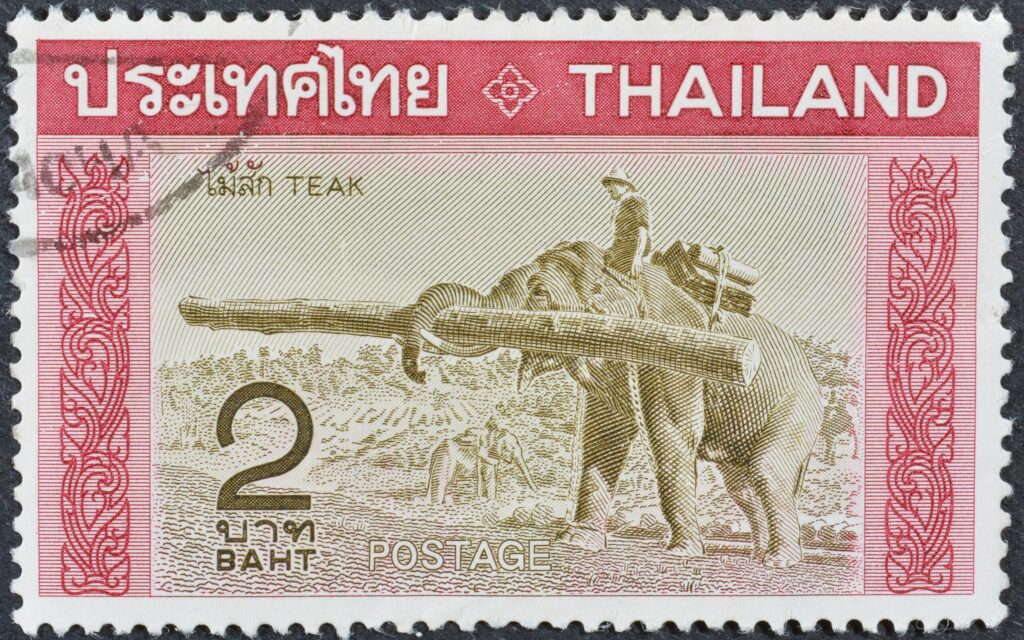
Elephant logging ban Thailand is one of the most important moments in the conservation history of Asian elephants — and one of the most important subjects that Dragon Study Tours closed groups aged 13 to 17 engage with across the Elephant Conservation Experience programme. Understanding why the elephant logging ban Thailand happened, what it meant for the thousands of working elephants that were suddenly without purpose, and how that moment connects directly to the rescued animals at the Hutsadin Elephant Foundation today is central to the elephant conservation education that the programme delivers. Running all year round.
What the Elephant Logging Ban Thailand Was
The elephant logging ban Thailand came into force in January 1989, following catastrophic flooding and landslides in the south of the country that were directly attributed to deforestation. Thailand had lost the majority of its forest cover to the commercial logging industry — an industry that had employed thousands of working elephants for generations — and the government’s response was to ban commercial logging entirely.
The elephant logging ban Thailand was the right decision for Thailand’s forests. But its consequences for the country’s working elephant population were severe and largely unforeseen. Overnight, approximately 4,000 working elephants and their mahouts lost their livelihoods. The industry that had sustained the mahout-elephant relationship for generations had ended.
What the Elephant Logging Ban Thailand Meant for Working Elephants
In the years following the elephant logging ban Thailand, thousands of mahouts faced an impossible choice. Their elephants needed enormous quantities of food — up to 150 kilograms per day — but the income that had paid for that food was gone. Many mahouts took their elephants to Bangkok and other Thai cities, begging on the streets. Others moved into the tourism industry, putting their elephants to work in trekking camps, shows, and photo operations.
The Elephant Conservation Network documents the post-logging ban period as one of the most challenging in the history of Thailand’s captive elephant population. The animals at the Hutsadin Elephant Foundation in Hua Hin are a direct product of that period — rescued from street begging, from trekking camps, from exploitation — and their individual stories connect directly to the elephant logging ban Thailand and its consequences.
What the Elephant Logging Ban Thailand Teaches Teen Groups
The elephant logging ban Thailand is not simply a historical event. It is a conservation lesson about unintended consequences, about the complex relationship between human livelihoods and wildlife welfare, and about the importance of planning beyond the immediate policy decision.
The Save Elephant Foundation has argued for years that sustainable solutions for Thailand’s captive elephant population must address the economic needs of mahouts as well as the welfare needs of elephants — because without economically viable alternatives to exploitation, the post-logging ban crisis will repeat itself in other forms.
Participants who understand the elephant logging ban Thailand and its consequences leave the Dragon Study Tours programme with a conservation education that goes well beyond elephants. They understand how economic forces shape conservation outcomes, and why the most effective conservation solutions are those that address human needs alongside animal welfare.
Safety in the Elephant Logging Ban Thailand Programme
All aspects of the Dragon Study Tours programme, from the Hutsadin sessions to the Kui Buri excursion, are managed within the full safety framework. The Palm Residence provides 24/7 supervision and safeguarding procedures aligned to British Council accreditation standards.
The programme runs all year round for closed groups. Visit our 50 things to do in Hua Hin guide, request a quote, make a booking, or read our FAQ.