

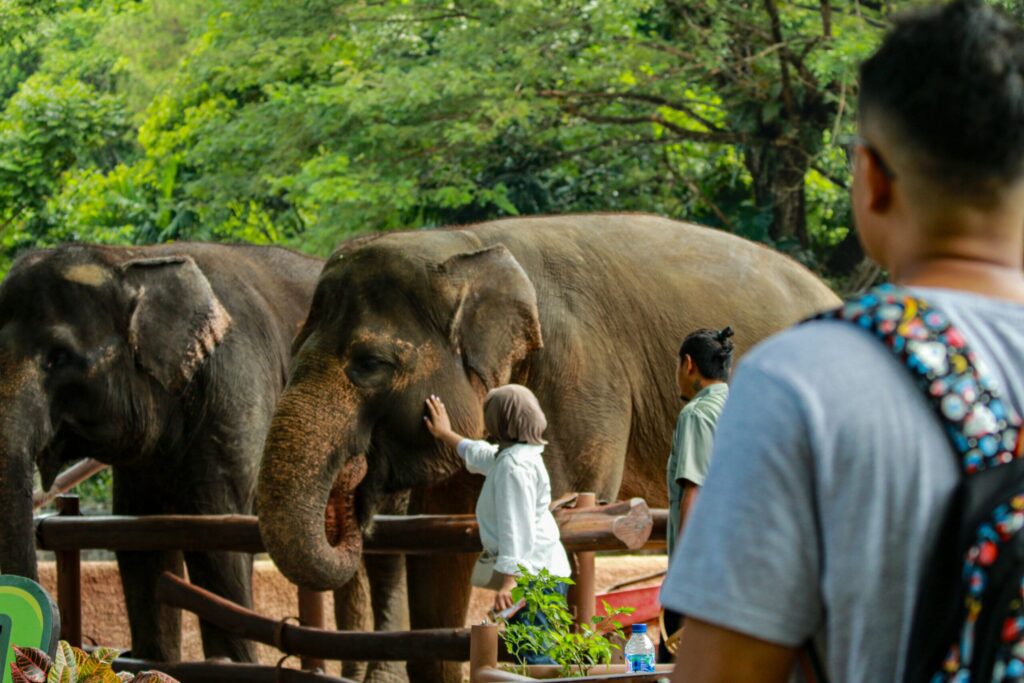
Elephant habitat Thailand is at the heart of the conservation crisis facing Asian elephants in the country — and one of the most important subjects that Dragon Study Tours closed groups aged 13 to 17 engage with across the Elephant Conservation Experience programme. Working at the Hutsadin Elephant Foundation in Hua Hin, exploring Kui Buri National Park, and learning from the Wildlife Friends Foundation Thailand in Phetchaburi all connect to a single, urgent question: what has happened to elephant habitat Thailand, and what can conservation do about it? Running all year round.
The Scale of Elephant Habitat Thailand Loss
Elephant habitat Thailand has been devastated over the past century. In the early twentieth century, forests covered more than 60% of Thailand. Today, that figure has fallen to around 30% — and the forests that remain are increasingly fragmented by agriculture, roads, and development. Wild elephants that once roamed vast, connected territories now live in isolated pockets of forest, unable to move freely between populations. The result is habitat loss, genetic isolation, and escalating human-elephant conflict as elephants venture into agricultural land in search of food.
The Wildlife Conservation Society Thailand monitors elephant habitat Thailand across the country and has identified habitat connectivity as the single most important factor in the long-term survival of wild elephant populations. Without large, connected areas of elephant habitat Thailand, even the most successful breeding populations will eventually decline.
How Elephant Habitat Thailand Loss Creates Captive Elephants
Understanding elephant habitat Thailand loss helps participants understand why the rescued elephants at Hutsadin are in Hua Hin. The logging ban that ended commercial elephant working in 1989 was itself a response to catastrophic deforestation — Thailand had lost so much elephant habitat Thailand to the logging industry that the forests could no longer support it. When the ban came into force, working elephants had nowhere to go. Their habitat had been destroyed by the very industry that had employed them.
The animals at Hutsadin Elephant Foundation are the human face of elephant habitat Thailand loss. They are what happens when you destroy a forest and then end the industry that the destruction made possible.
Elephant Habitat Thailand at Kui Buri: What Protection Looks Like
The weekend excursion to Kui Buri National Park shows participants what protected elephant habitat Thailand looks like — and what it makes possible. Kui Buri is one of the most important protected areas for wild elephants in Thailand, and the wild elephant population there is one of the most stable in the country because the habitat has been protected and the wildlife corridor maintained.
For groups who have spent the week working with rescued elephants at Hutsadin, seeing wild elephants moving freely through their natural elephant habitat Thailand at Kui Buri completes the conservation picture in the most powerful way possible.
Safety in the Elephant Habitat Thailand Programme
All sessions in the Dragon Study Tours programme, from Hutsadin to Kui Buri, are managed within the full safety framework. Transport is by private air-conditioned coach. The Palm Residence provides 24/7 supervision and safeguarding procedures aligned to British Council accreditation standards.
The programme runs all year round for closed groups. Visit our 50 things to do in Hua Hin guide, request a quote, make a booking, or read our FAQ.