

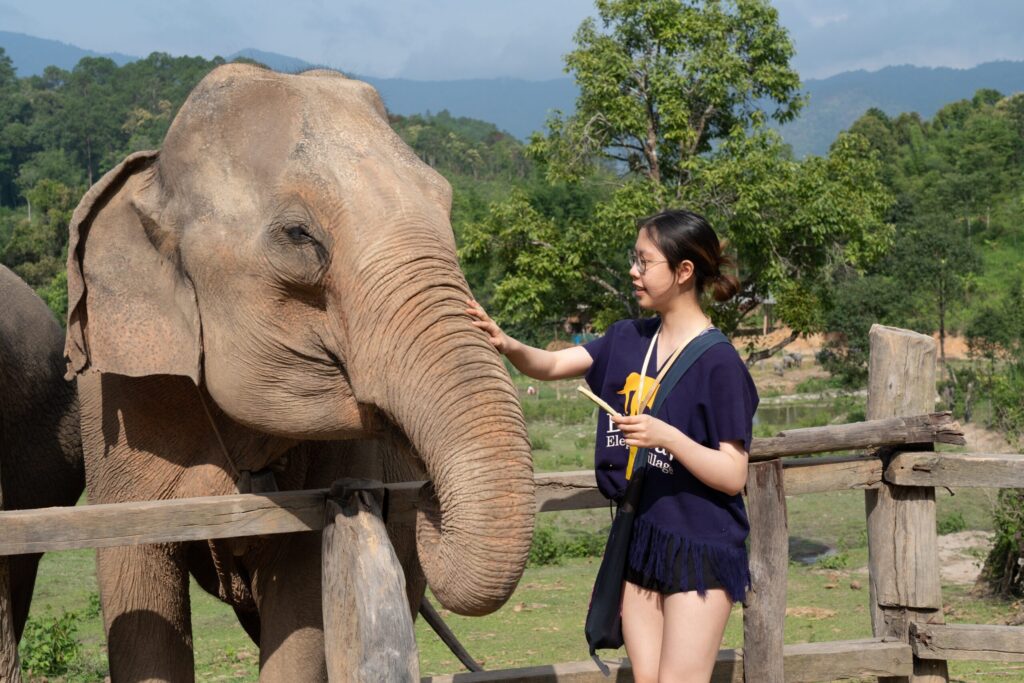
Elephant feeding Thailand is one of the first things participants do when they arrive at the Hutsadin Elephant Foundation each morning — and one of the activities that most directly reveals how much there is to learn about the rescued elephants in their care. Dragon Study Tours closed groups aged 13 to 17 contribute to the elephant feeding Thailand programme across seven morning sessions, developing a working knowledge of each animal’s dietary needs, preferences, and health requirements. Running all year round.
What Elephant Feeding Thailand Involves
Elephant feeding Thailand at a rescue sanctuary is not simply a matter of filling a bowl. Asian elephants eat up to 150 kilograms of food per day — a volume that requires significant daily preparation. Their diet in a sanctuary setting is designed to provide adequate nutrition while accommodating the specific health needs of individual animals, many of whom arrive with nutritional deficiencies from years of inadequate care.
At Hutsadin, the elephant feeding Thailand preparation begins before the elephants are presented with their food. Participants work alongside the care team to prepare the specific combination of fruits, vegetables, sugar cane, and other food items that each elephant requires. They learn which animals have dietary restrictions due to health conditions. They learn about the nutritional requirements of Asian elephants and how sanctuary diets are designed to meet them.
The Asian elephant is a browser and a grazer in the wild, spending up to 18 hours per day foraging across large territories. In a sanctuary setting, the elephant feeding Thailand programme is designed to provide that nutritional variety while accommodating the physical limitations of a captive environment.
What Elephant Feeding Thailand Teaches
The elephant feeding Thailand programme at Hutsadin teaches participants things that go well beyond diet and nutrition. It teaches them about individual animals — their personalities, their preferences, and the specific histories that have shaped those preferences. It teaches them about the economics of rescue sanctuary operations — the sheer volume of food required for even a small number of elephants makes feeding costs one of the primary financial challenges facing foundations like Hutsadin.
The Save Elephant Foundation documents the feeding challenges facing Thailand’s captive elephant population across the country — challenges that became acute during the COVID-19 pandemic when tourism income collapsed and sanctuaries struggled to purchase adequate food. The elephant feeding Thailand programme at Hutsadin puts participants in direct contact with those challenges and the daily reality of addressing them.
Building Relationships Through Elephant Feeding Thailand
By the third elephant feeding Thailand session, participants know which elephant responds most enthusiastically to which food. By the fifth, they understand the individual health considerations that shape each animal’s diet. By the seventh, the elephant feeding Thailand routine has become a genuine relationship — built on the daily trust of presenting food to an animal that has learned to associate participants with care and nourishment.
Safety During Elephant Feeding Thailand
All elephant feeding Thailand sessions at Hutsadin are supervised by Dragon Study Tours staff alongside the foundation’s own mahout and care team. The Palm Residence provides 24/7 supervision, secure access, and a dedicated welfare team throughout. Safeguarding procedures are aligned to British Council accreditation standards.
The programme runs all year round for closed groups. Visit our 50 things to do in Hua Hin guide, request a quote, make a booking, or read our FAQ.