

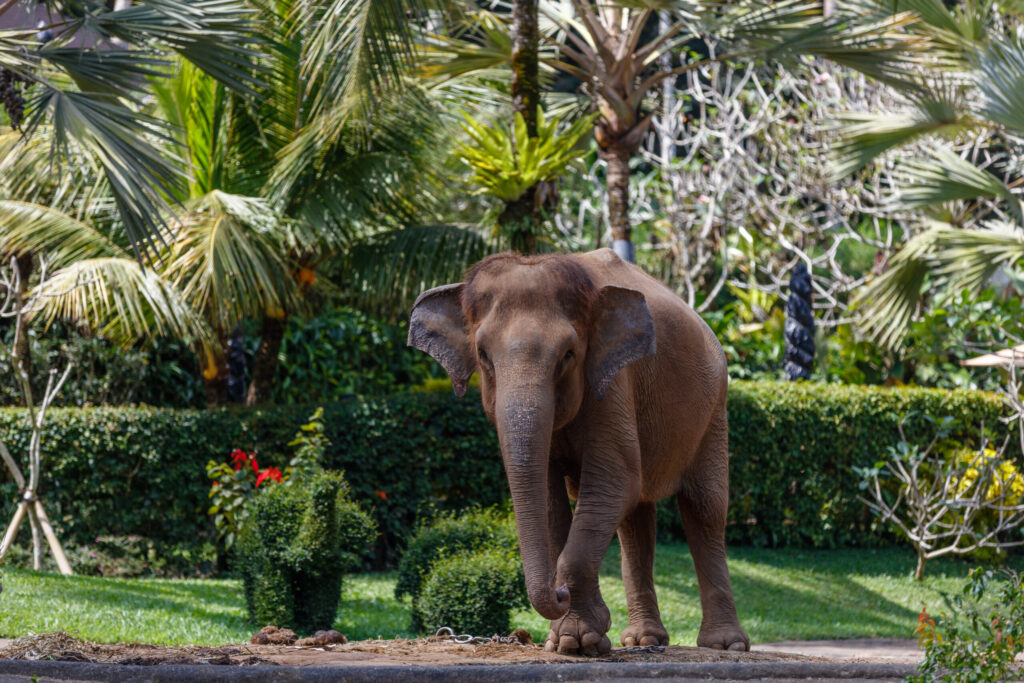
Asian elephants Thailand is a subject that most teenagers know something about before they arrive on the Dragon Study Tours Elephant Conservation Experience. They know the elephant is Thailand’s national animal. They know it is endangered. What they do not know — and what seven morning sessions at the Hutsadin Elephant Foundation and a weekend excursion to Kui Buri National Park teaches them in extraordinary depth — is the full, complex, and deeply human story behind the crisis facing Asian elephants Thailand. Running all year round for closed groups aged 13 to 17.
The Scale of the Asian Elephants Thailand Crisis
The World Wildlife Fund estimates that fewer than 50,000 Asian elephants remain in the wild across 13 range countries. In Thailand, the wild population is estimated at between 3,000 and 4,000. The captive population — elephants living and working alongside humans — is a similar size, with around 3,700 registered captive Asian elephants Thailand.
The relationship between Asian elephants Thailand and Thai people stretches back centuries. Elephants worked in logging, in warfare, in royal ceremonies, and in the daily lives of communities across the country. When Thailand banned commercial logging in 1989, that relationship was severed almost overnight. Thousands of working elephants were suddenly without purpose. Their mahouts faced poverty. Many animals ended up on the streets or in the tourism industry under conditions that caused lasting harm.
What Asian Elephants Thailand Actually Need
Asian elephants Thailand require enormous quantities of food — up to 150 kilograms per day. They require space — wild elephants roam territories of hundreds of square kilometres. They require social connection — elephants are highly intelligent, deeply social animals whose psychological health depends on companionship and stable relationships with their carers.
At the Hutsadin Elephant Foundation, participants work alongside mahouts and care staff who provide exactly that care for the rescued Asian elephants Thailand in their charge. By working through seven morning sessions, groups develop a genuine understanding of what Asian elephants Thailand actually need — not as an abstract concept, but as a daily, practical reality.
Wild Asian Elephants Thailand: Kui Buri
The wild Asian elephants Thailand experience comes on the weekend excursion to Kui Buri National Park — one of the best places in the country to observe wild Asian elephants in their natural habitat. The Elephant Conservation Network identifies Kui Buri as one of the most important protected areas for wild Asian elephants Thailand.
For groups who have spent the week caring for rescued Asian elephants Thailand at Hutsadin, seeing wild elephants at Kui Buri brings the entire conservation picture into focus. These are the animals that conservation is ultimately working to protect — and seeing them free, in their natural habitat, is one of the most powerful moments of the entire programme.
Safety on the Asian Elephants Thailand Programme
All sessions with Asian elephants Thailand on the Dragon Study Tours programme are managed within the full safety framework. The Palm Residence provides 24/7 supervision, secure access, and a dedicated welfare team. All transport is by private air-conditioned coach. Safeguarding procedures are aligned to British Council accreditation standards.
The programme runs all year round for closed groups. Visit our 50 things to do in Hua Hin guide, request a quote, make a booking, or read our FAQ.